01
The market, at six
Six mornings a week, before the city is properly awake. We buy short and we buy what is genuinely good that day rather than what a recipe told us to order in advance.
Since 2019, in one small room
K a n n a is six people, eleven growers and one cold room. Everything we make passes through the same pair of hands twice - once when it is bought, and once when it is built.
The philosophy
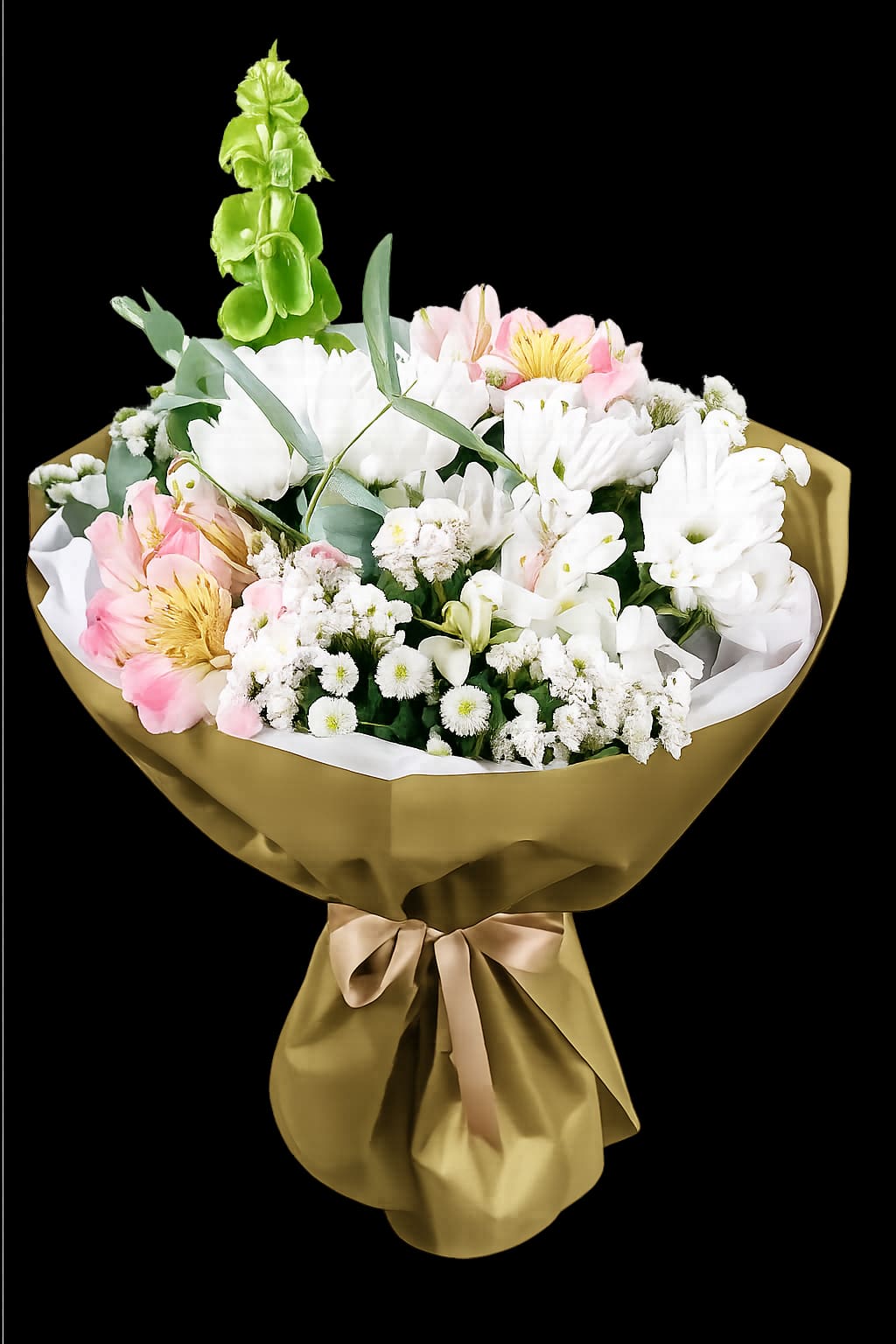
A bouquet is a piece of writing. Most florists shout. We would rather say one thing clearly and let it sit in the room.
That means editing. It means a third blush rather than a second, a darker note low in the arrangement, and a willingness to leave a gap where a lesser bouquet would put filler. It also means we will occasionally send you eleven stems instead of thirty and charge you more for it.
We work with what the season actually gives us. If the peonies are poor that week we will tell you and suggest something else, rather than sending a tight, tired head that never opens. The arrangement you receive is the one we would have kept for ourselves.
The floral design process
Most of what makes a bouquet last happens before it looks like anything at all.
Six mornings a week, before the city is properly awake. We buy short and we buy what is genuinely good that day rather than what a recipe told us to order in advance.
Every stem is stripped, cut at an angle and left to drink for at least four hours before anyone arranges anything. It is the least glamorous step and the one that decides how long your flowers live.
Spiral hand-tie, no foam, no wire cages. Each arrangement is turned as it is built so it reads well from every angle rather than only from the front.
Cotton rag, waxed paper and a paper tie. It goes into a crate, into a cool van, and into your hands - never left on a doorstep in the sun.
What we commit to
We buy from eleven growers we know by name, most within two hundred kilometres. When a flower has to be imported - peonies out of season, phalaenopsis - we say so on the product page rather than quietly flying it in.
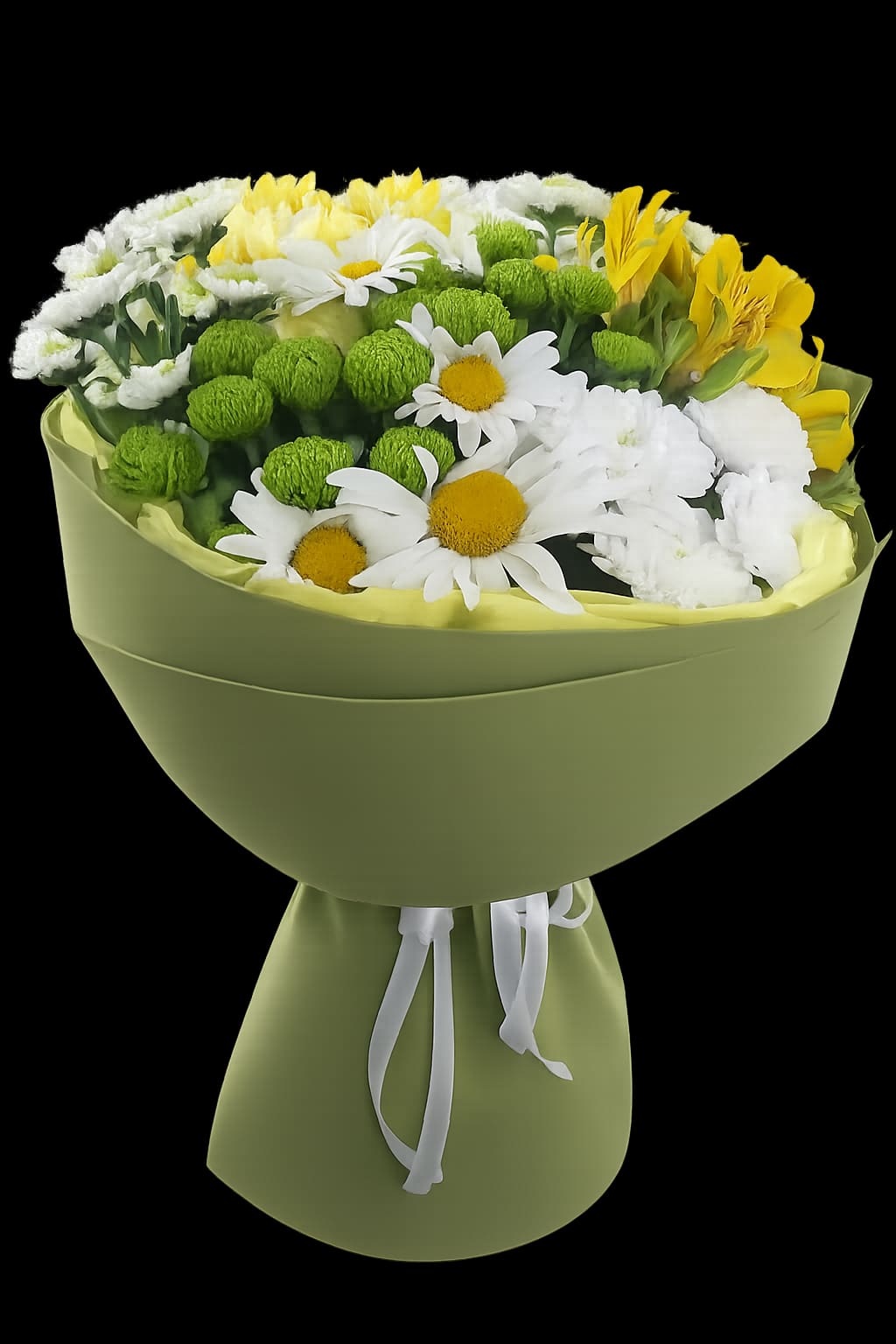
No cellophane, no floral foam, no plastic ribbon. Cotton rag, waxed kraft paper, paper twine and a reusable crate that our drivers take back with them. The card stock is 100% recycled and printed with vegetable ink.
Stems that do not make the grade go into the market jars rather than the bin. What is genuinely spent is composted with a grower who takes it back on the morning run. We have not sent floral waste to landfill since 2023.
Six people, all paid above the living wage, all trained to design rather than only to assemble. The person who buys your flowers is usually the person who arranges them.
The people
The person who buys your flowers at the market is usually the person who arranges them. Here are three of them.
Founder & lead designer
Trained in Amsterdam, spent nine years in event floristry before deciding she preferred the Tuesday orders to the weddings.
Studio manager
Runs the market list, the van route and the growers' relationships. Has strong opinions about how long tulips should be cut.
Senior florist
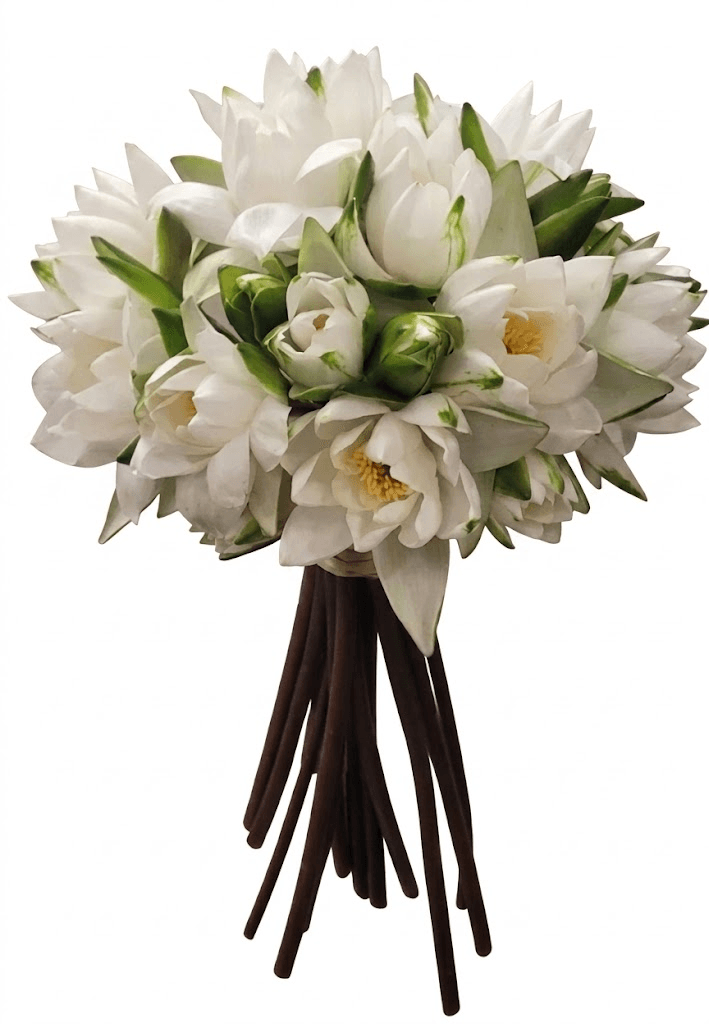
Responsible for the minimal work and most of the studio's photography. Believes nine stems can beat ninety.
Thursday letters
Receive seasonal flower inspiration, new collection announcements, and thoughtful gifting ideas.
One considered email a week. No resale of your details, ever - unsubscribe in a single click.